
Introduction
In precision manufacturing, part cleanliness is a cornerstone of quality and reliability. As industries like medical, aerospace, and electronics continue to push the boundaries of design, the geometry of manufactured parts has become increasingly intricate. Understanding how part geometry influences cleaning outcomes is essential for manufacturers seeking to meet the highest standards of technical cleanliness.
The Geometry Challenge
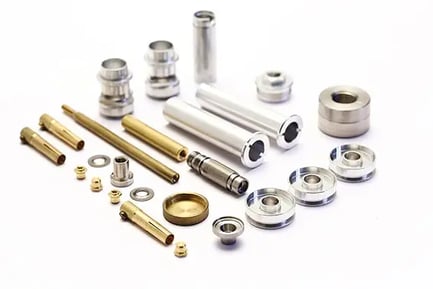
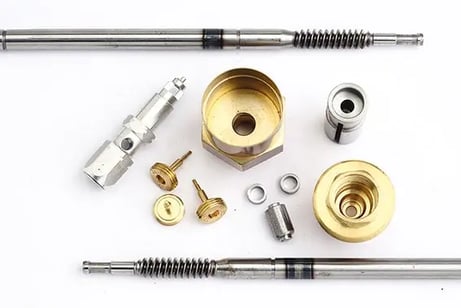
Modern manufacturing, especially Swiss machining, produces components with micro-holes, fine threads, cross-drilled passages, and other complex features. These features present unique challenges for cleaning:
- Micro-holes and capillaries: Small diameters and deep channels can trap fluids and particulates.
- Fine threads and cross-drilled passages: Intersecting features can trap contaminants.
- Tight tolerance or surface finish requirements: Demands thorough cleaning and gentle handling to avoid damage.
Contaminants such as cutting oils, coolants, and particulates can become lodged in complex part features. If not properly removed, they can compromise product performance, regulatory compliance, and downstream processes like coating or assembly.
How Cleaning Technologies Address Complexity
Aqueous Cleaning Systems
Water-based cleaning is common, using detergents, spray, immersion, or ultrasonic agitation. While effective for simple shapes, aqueous systems often struggle with intricate geometries:
- Limited fluid penetration: Water-based solutions may not reach deep cavities or micro-holes.
- Drying challenges: Residual water can remain, risking corrosion or leaving behind drying spots.
- Material compatibility: Aggressive detergents may damage sensitive alloys or finishes.
Ultrasonic Cleaning
Ultrasonic cleaning uses high-frequency sound waves to create cavitation bubbles that dislodge contaminants. It’s effective for some intricate designs, but may require multiple cycles for heavily soiled or highly complex parts. Complete drying and residue removal can still be problematic, especially for parts with blind holes or intersecting channels.
Solvent-Based Cleaning
Solvent cleaning (hydrocarbon, modified alcohol) is often the only way to thoroughly clean parts with challenging geometry or metals incompatible with aqueous solutions. However, environmental and safety regulations have increased scrutiny on certain solvent use, driving innovation in how these systems operate.
Vacuum Degreasing: The Solution for Complexity
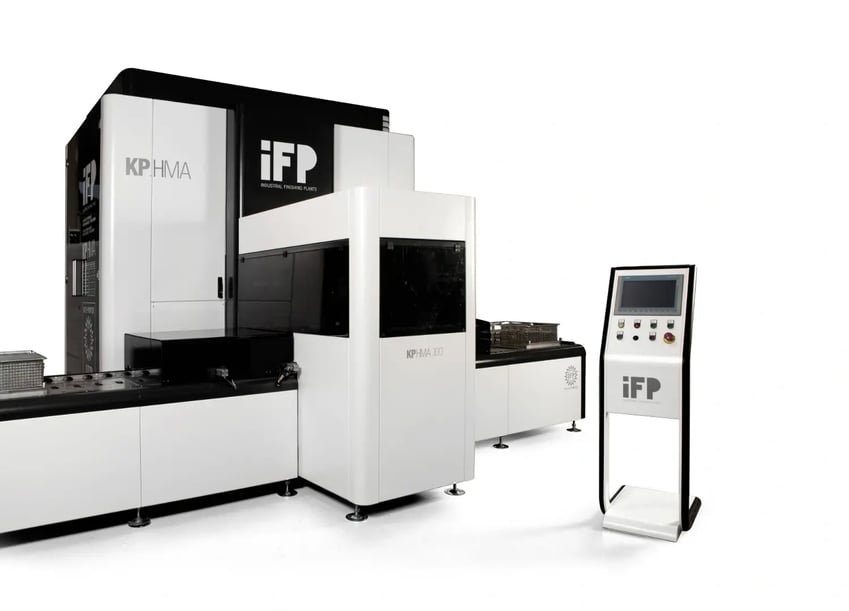
Vacuum degreasing systems are designed to overcome the limitations of traditional methods. Here’s how they excel at cleaning complex parts:
- Fluid penetration: The vacuum environment draws solvents into micro-holes, threads, and passages, ensuring thorough contaminant removal.
- Consistent results: Internal distillation and filtration maintain solvent quality, delivering stable outcomes even with heavy soil loads.
- Reliable dryness: Vacuum drying removes residual liquids from the smallest features; parts exit the machine completely dry and spot-free.
- Process consistency: Programmable cleaning cycles can be geared toward part geometry and contamination type, ensuring repeatable results.
Modular basket systems further support cleaning of delicate, intricate parts by allowing secure, contact-free handling and optimal orientation for solvent flow.
Technical Cleanliness: Meeting Industry Standards
As tolerances become tighter and designs more complex, even microscopic contaminants can compromise performance or trigger costly failures. Industry standards are evolving to focus on particulate contamination in critical systems, underscoring the need for cleaning solutions that address geometric complexity.
Vacuum degreasing platforms are engineered to meet these demands, delivering thorough, repeatable cleaning for even the most intricate components.
Conclusion: Designing for Cleanliness in the Age of Complexity
Part geometry is a critical factor in cleaning outcomes. As Swiss machining and micro-manufacturing continue to advance, cleaning systems must evolve to meet these challenges. Vacuum degreasing platforms offer a robust solution, combining advanced technology with flexible engineering to deliver reliable cleanliness even for the most complex parts.
For manufacturers, understanding the interplay between geometry and cleaning is essential for quality, compliance, and long-term reliability.
Interested in learning more about optimizing your cleaning process? Contact us today to learn more.