

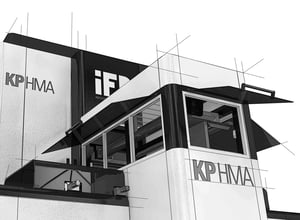
If your cleaning process involves constant bath changes, stubborn residue in hard-to-reach areas, or inconsistent results from part to part, the issue likely isn't your operator or your technique. It's your technology.
Vacuum degreasing is a fundamentally different approach to parts cleaning, and it solves many of the headaches that manufacturers have come to accept as normal. For shops unfamiliar with the process, here's how it works and why it consistently outperforms both legacy solvent systems and aqueous alternatives.
What Is Vacuum Degreasing?
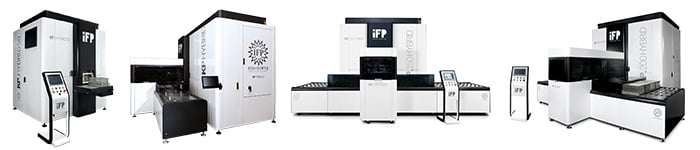
At its core, vacuum degreasing is a sealed cleaning process that uses modified alcohol solvent inside a closed chamber. Parts are loaded into a basket, the chamber is sealed, and the system draws a vacuum before introducing the solvent. The vacuum serves two purposes: it lowers the solvent's boiling point (which reduces energy consumption) and it forces solvent into every crevice, blind hole, and thread on the part. Once the cleaning cycle is complete, the system uses vacuum drying to pull residual solvent from the part surfaces, leaving them completely dry and spot-free.
What makes this process so effective is what happens behind the scenes. The contaminated solvent is continuously sent to a built-in distillation system where it's heated to separate oil from solvent vapor. That vapor is condensed back into clean liquid and recirculated through the machine's tanks for reuse. The oil and contaminants are discharged separately. This closed-loop recovery cycle means the solvent stays clean, the machine stays efficient, and your results stay consistent from the first part to the last.
Why It Cleans Better Than Aqueous
Many manufacturers turned to aqueous (water-based) cleaning after legacy solvents like TCE and nPB were phased out due to health and environmental regulations. Aqueous systems can work for certain applications, but they introduce a set of challenges that vacuum degreasing simply doesn't have.
Water doesn't penetrate the way solvent does. If you're cleaning parts with tight tolerances, deep blind holes, internal threads, or complex geometries, aqueous systems struggle to reach and flush contamination from those areas. Modified alcohol, used in iFP Clean vacuum degreasing systems, has significantly lower surface tension than water, allowing it to flow into and clean micro-features that water-based solutions miss entirely.
Then there's the drying problem. Aqueous systems require extensive drying, often with separate equipment, and hard water leaves mineral deposits and spots on part surfaces. These spots aren't just cosmetic. For applications in medical devices, aerospace, or any process where parts move directly to coating, bonding, or assembly, surface contamination from water residue can cause failures downstream. Vacuum degreasing eliminates this concern entirely because the vacuum drying step leaves parts completely dry with zero residue. No reverse osmosis system. No deionized water infrastructure. No spotting.
The Maintenance Advantage
One of the most overlooked benefits of vacuum degreasing is how little attention the system demands once it's running.
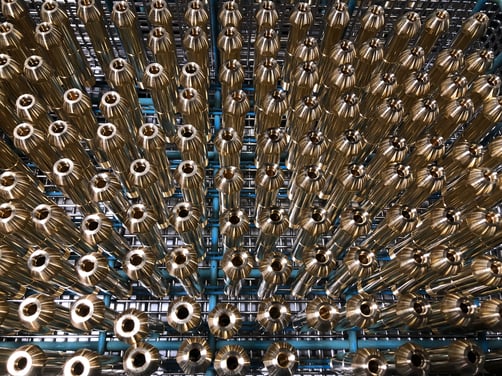
Aqueous systems require frequent bath changes as detergent effectiveness degrades and contamination accumulates. Flat-bottom tanks collect chips and debris that need manual clearing. Filtration systems clog and need regular replacement. Oil-water separation is a constant challenge that adds labor and waste disposal costs to every shift.
Vacuum degreasing sidesteps all of this. Because the solvent is continuously distilled and recirculated, the cleaning medium stays fresh without manual intervention. Contaminants are separated automatically and discharged. There's no bath to change, no detergent concentration to monitor, and no oil-water separation headache to manage. The result is a system that runs reliably with minimal operator involvement, freeing your team to focus on production rather than babysitting the parts washer.
Lower Long-Term Costs
The initial purchase price of a vacuum degreasing system is higher than a basic aqueous washer, and that's the number most manufacturers fixate on. But the total cost of ownership tells a very different story.
Closed-loop solvent recovery reduces solvent consumption by up to 90% compared to traditional open-tank solvent systems. Energy-efficient vacuum technology with integrated heat recovery keeps utility costs low. There's no need for RO/DI water systems, no recurring detergent purchases, no wastewater treatment, and no costly waste disposal. Cycle times are typically shorter as well, with most wash-and-dry cycles completing in 15 to 30 minutes compared to 45 to 90 minutes for aqueous systems that require extended drying.
When you add up the consumables, labor, waste handling, and downtime savings over the life of the equipment, vacuum degreasing consistently delivers a lower cost per clean part.
A Future-Proof Investment
The regulatory landscape for industrial solvents continues to tighten. The EPA has finalized bans on TCE, PERC, and other hazardous chemicals. 3M completed its voluntary phase-out of Novec PFAS products at the end of 2025. HFE solvents face increasing scrutiny.
Vacuum degreasing systems using EPA-compliant modified alcohol aren't just cleaning better today. They're positioned to keep cleaning without disruption as regulations evolve. For manufacturers evaluating their next parts cleaning investment, long-term certainty matters just as much as today's cleaning results.
